
PTE Complete Guide: Syllabus, Format, Tips, and Free Online Practice Test Materials
The Pearson Test of English (PTE) is a globally recognized English language proficiency exam accepted by thousands of universities, colleges, and government agencies worldwide. Renowned for its fair and accurate assessment of all core language skills—speaking, writing, reading, and listening—the PTE is essential for students, immigrants, and professionals seeking opportunities in countries like the USA, UK, Australia, Canada, and New Zealand. A strong PTE score can unlock doors to academic, immigration, and career success.
The syllabus is divided into three main sections:
- Speaking and Writing
- Reading
- Listening
Strategic Overview of PTE 2025 Changes
The 2025 update marks a shift from “hacking the AI” to “demonstrating communicative competence.”
- The Hybrid Scoring Model: Pearson now uses a combination of AI and human oversight for high-stakes tasks like the Essay and the new Speaking tasks. This means rigid, repetitive templates are now less effective.
- The “Beep” Cue: In the Repeat Sentence task, a tone now signals exactly when the microphone starts recording.
- New Speaking Tasks: Two tasks have been added to simulate real-world university and professional interactions: “Respond to a Situation” and “Summarize Group Discussion.”
- Visual Interface Updates: A new circular progress bar and a live audio waveform help candidates monitor their speaking volume and remaining time more intuitively.
The New PTE Academic syllabus reflects a major shift toward authentic, real-world communication. Effective August 7, 2025, the test duration is approximately 2 hours and 15 minutes, conducted without an optional break. The exam now includes 22 question types and utilizes a hybrid scoring model where AI evaluations of fluency and pronunciation are augmented by human expert review of content relevance for specific tasks.
PTE Academic Question Types in Detail:
Speaking & Writing (8 question types, 54-67 minutes total):
1. Personal Introduction:
A brief, ungraded introduction about yourself.
- Prep time: 25 seconds for the prompt
- Recording time: 30 seconds
- Number of questions: 1 (unscored)
2. Read Aloud:
Read a short text aloud clearly and fluently.
-
- Prep time: 30-40 seconds to prepare for reading a text of up to 60 words
- Recording time: Up to 40 seconds to read aloud
- Number of questions: 6-7
- Tests: Pronunciation and oral fluency
- 2025 Update: This now contributes points only to Speaking; it no longer impacts your Reading score.
- For example, Charles Darwin published his paper “On the Origin of Species” in 1859. It is one of the most well-known pieces of scientific literature in human history. In the paper, Darwin proposed the theory of natural selection. He states that for any generation of any species, there will always be a struggle for survival. Individuals who are better suited to the environment are “fitter”, and therefore have a much higher chance of surviving and reproducing. This means that later generations are likely to inherit these stronger genetic traits.
3. Repeat Sentence:
Listen to a sentence and repeat it verbatim.
-
-
- Prep time: 3-9 seconds to listen to the sentence and repeat it exactly.
- Recording time: 15 seconds to repeat.
- A “beep” now clearly signals when to start speaking.
- Shared Marking: Contributes to both Speaking and Listening.
- Number of questions: 10-12
- For example,
-
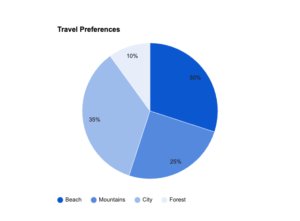
4. Describe Image:
Describe a visual image in detail (a graph, map, chart, or picture). The question count has increased for 2025.
Update: Human scorers now check for logical connections and relevance, penalizing overly generic templates.
-
-
-
- Prep time: 25 seconds to study the image
- Recording time: 40 seconds to describe
- Number of questions: 5-6
- For example,
-
-
5. Re-tell Lecture:
Summarize a short lecture in your own words.
- The question count is increased for 2025.
Shared Marking: Contributes to both Speaking and Listening.
-
- Prep time: 10 seconds to prepare after listening to a 90-second lecture
- Recording time: 40 seconds to re-tell the lecture
- Number of questions: 2-3
- For example,
6. Respond to a Situation (NEW: 2–3 questions)
- You are given a short real-life scenario (audio and text).
- Prep time: 10 seconds to prepare
- Recording time: 40 seconds to give a socially appropriate, spontaneous response.
7. Summarize Group Discussion (NEW: 2–3 questions)
- Listen to a 3-minute discussion between multiple speakers (academic topic).
- Prep time: 10 seconds
- Recording time: 2 minutes to provide a spoken summary identifying the main ideas and different viewpoints.
- Number of questions: 2-3
8. Answer Short Questions (5–6 questions)
Provide a one-word or short-phrase answer to a general knowledge question. 2025 Update: This now contributes points only to Listening.
Answer a spoken question with a short, concise response.
-
- Prep time: 3-9 seconds to listen to the question
- Recording time: 10 seconds to answer
- Number of questions: 5-6
- For example,
9. Summarize Written Text:
Write a one-sentence summary of a short text.
-
- Prep time: 10 minutes to read and summarize a text of up to 300 words
- Word limit: 5-75 words
- Number of questions: 1-2
- For example,Read the passage below and summarize it using one sentence.
Type your response in the box at the bottom of the screen. You have 10 minutes to finish this task. Your response will be judged on the quality of your writing and on how well your response presents the key points in the passage.
As a car owner, you may be concerned about your vehicle’s environmental impact. Transportation is responsible for approximately 25% of all greenhouse gas emissions, most of which are attributed to road transport. This has prompted research into alternative solutions that can help reduce the impact of vehicles on the environment, such as using ethanol as a fuel source. Ethanol is a renewable fuel compatible with most cars and particular trucks, and its use can increase vehicle efficiency. This not only helps reduce a vehicle’s carbon footprint but also enables car owners to save money on fuel costs. In addition to its potential to boost engine efficiency, ethanol has the added benefit of reducing harmful emissions and pollutants contributing to climate change.
An essential aspect of ethanol as a fuel source is that it does not require significant infrastructure investment to deliver results. This is due to its ability to be integrated easily into existing fuel supply chains, making it a convenient option for car owners.
Finally, using ethanol as a fuel source has positive environmental implications. This makes ethanol a more sustainable and environmentally friendly fuel option.
10. Write an Essay:
Write a 200-300-word essay on a given topic.
-
- Prep time: 20 minutes to plan and write an essay
- Word limit: 200-300 words
- Number of questions: 1
- For example, Question 1: Countries with high rates of university education report higher levels of technological development and productivity. Many people believe that university education should be free for all citizens. What are the advantages and drawbacks of free university education?
Section 2: Reading (5 question types, 29-30 minutes total):
1. Multiple Choice, Multiple Answers:
Choose multiple correct answers from a list of options. Read a text and select all the correct options. Warning: Negative Marking Applies. You earn +1 for each correct choice and -1 for each incorrect choice (minimum score is 0).
-
- Time per question: Varies
- Number of questions: 2-3
2. Multiple Choice, Single Answer:
Read a passage and choose one correct answer from a list of options.
-
- Time per question: Varies
- Number of questions: 2-3
3. Re-order Paragraphs:
Arrange jumbled text boxes into the correct logical order. Scoring is based on “correct pairs” of adjacent boxes.
-
- Time per question: Varies
- Number of questions: 2-3
- For example,
4. Fill in the Blanks (Dropdown) (Reading only):
Drag words from a pool at the bottom to fill gaps in a short text.
-
- Time per question: Varies
- Number of questions: 4-5
- For example,
5. Reading: Fill in the Blanks (Dropdown)
Choose the correct word from a dropdown list to complete a passage. 2025 Update: This now contributes points only to Reading; it no longer affects your Writing score.
-
- Time per question: Varies depending on the text length
- Number of questions: 5-6
- For example,
Section 3: Listening (8 question types, 30-43 minutes total):
1. Summarize Spoken Text:
Write a 50-70-word summary of a short audio clip (50-60 seconds) in 10 minutes. Update: Content scoring is now more granular (0–4 points) and includes human oversight.
Shared Marking: Contributes to both Listening and Writing.
-
- Prep time: 10 minutes to listen and summarize
- Word limit: 50-70 words
- Number of questions: 1-2
- For example,
2. Multiple Choice, Multiple Answers:
Choose all correct options from a list of options after listening to an audio clip. Warning: Negative Marking Applies (+1 for correct, -1 for incorrect).
-
- Time per question: Varies
- Number of questions: 2-3
- For example,
3. Fill in the Blanks (Type In) (Listening):
Type missing words into a transcript as you hear the audio. 2025 Update: This now contributes points only to Listening; it no longer affects your Writing score.
-
- Time per question: Varies
- Number of questions: 2-3
- For example,
4. Highlight Correct Summary:
Listen to a clip and choose the text summary that best matches it.
Shared Marking: Contributes to both Listening and Reading.
-
- Time per question: Varies
- Number of questions: 2-3
- For example,
A) Business students are finding it increasingly difficult to get employment, as the standard of law courses has declined since 2007. Employers have criticized the schools for adopting unsatisfactory teaching methods, and have urged them to ensure students get higher grades.
B) In order to improve the chances of their students obtaining jobs after they have finished their courses, some business schools are adjusting their grades. These adjustments are being made to all grades awarded since 2007, but instead of benefiting the students, they are, in some instances, having the opposite effect.
C) Some business schools have realized that their grading system has been inaccurate since 2007 and are currently making changes to correct the errors. Students’ grades are being revised, and employers have welcomed this move as it means that they will be able to employ better-qualified students.
D) Since 2007, the education of business students has been improving, but this has not been reflected in the grades that they are achieving. Business schools have been under pressure from employers to ensure that the grades that students are achieving match their abilities far better than in recent years.
5. Multiple Choice, Single Answer (Listening):
Choose one correct answer from a list of options after listening to an audio clip.
-
- Time per question: Varies
- Number of questions: 2-3
- For example,
What is the speaker’s main focus?
A) reasons why Americans have relocated
B) the growth in the American population
C) the expansion of suburban towns
D) trends in where Americans live
6. Select Missing Word:
Identify the word or phrase replaced by a “beep” at the end of an audio clip. Choose the missing word from a list of options to complete a sentence in an audio clip.
-
- Time per question: Varies
- Number of questions: 1-2
- For example,
7. Highlight Incorrect Words:
Follow a transcript while listening and click words that differ from the audio. Warning: Negative Marking Applies (+1 for correct, -1 for incorrect).
Shared Marking: Contributes to both Listening and Reading.
-
- Time per question: Varies
- Number of questions: 2-3
- For example,
8. Write From Dictation:
Listen to a short sentence and type it exactly. Each correct word earns 1 point.
-
- Shared Marking: High-impact task contributing heavily to Listening and Writing.
-
- Time per question: Varies
- Number of questions: 3-5
- For example,
PTE Scoring
- Overall score: 10-90
- Communicative skills: 10-90 (For each module)
Important Notes:
- The number of questions can vary slightly between test versions.
- “Prep time” refers to the time specifically allocated before you have to start speaking or writing. It doesn’t include the time spent reading instructions or navigating between questions.
- The overall time limits for each section are fixed, so effective time management is crucial.
Essential Scoring & Preparation Notes
- Negative Marking: Deductions only occur in MC Multiple Answer (Reading), MC Multiple Answer (Listening), and Highlight Incorrect Words.
- Hybrid Scoring: Describe Image, Retell Lecture, SGD, Respond to a Situation, SWT, Essay, and SST are now double-checked by human raters for content relevance and originality.
- The “No-Break” Rule: Ensure students practice 2-hour, 15-minute mock tests without pauses to build stamina, as the optional 10-minute break has been removed.
- New User Interface: The 2025 test features an updated, modern interface with improved navigation and accessibility features.
Back to the main page
https://www.mihiraa.com/pte/