
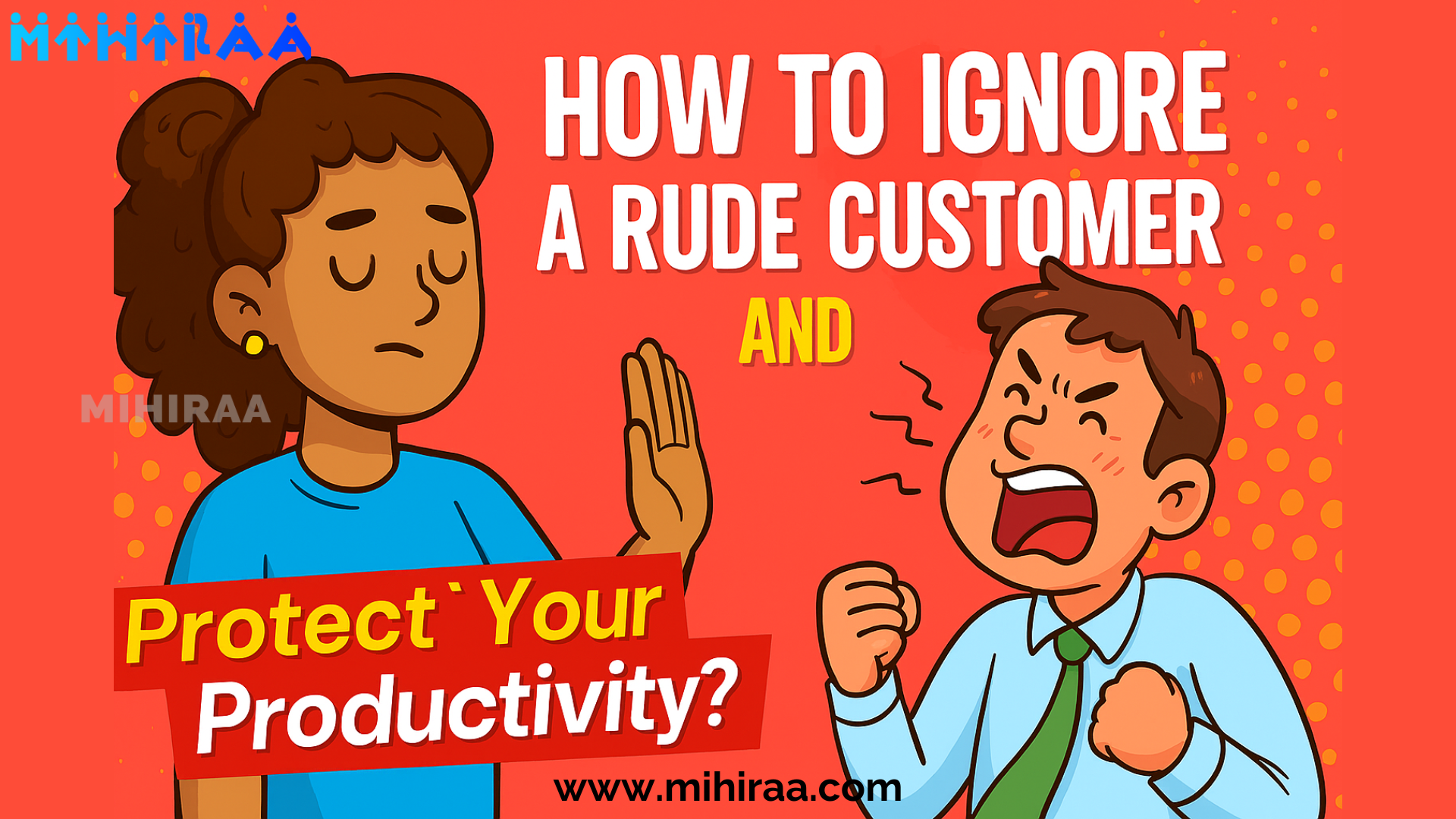
How to Ignore a Rude Customer and Protect Your Productivity: A Professional’s Guide
Struggling with a rude customer affecting your focus? Learn proven strategies to professionally ignore disrespect, de-escalate conflict, and safeguard your mental health and productivity.
Introduction: The High Cost of Customer Rudeness
Whether you’re a nurse being treated like a servant, a retail worker facing constant complaints, or a call center agent weathering verbal abuse, dealing with a rude customer is an unfortunate reality for many professionals. The impact goes beyond a single bad interaction. It can drain your emotional energy, shatter your focus, and significantly reduce your productivity for the entire day.
The key isn’t to become cold or uncaring, but to develop a professional toolkit that allows you to ignore the personal attack while addressing the professional problem. This article provides actionable strategies to help you maintain your composure, protect your peace, and remain productive in the face of rudeness.
Understanding the “Why”: It’s Not About You
The first and most crucial step in ignoring rudeness is internalizing this truth: A customer’s rudeness is almost never about you personally. You are often the nearest target for emotions stemming from elsewhere.
Common root causes of customer rudeness include:
- Fear and Anxiety: A patient is scared about their health. A client is anxious about losing money.
- Frustration: They are frustrated with a system, a long wait, or a previous negative experience.
- Feeling a Loss of Control: Illness or a faulty product can make people feel powerless, and lashing out is a misguided attempt to regain control.
- Plain Bad Manners: Sometimes, it’s simply a reflection of their character, not your performance.
By depersonalizing the attack, you strip it of its power to hurt you. You are a professional performing a role; don’t accept the invitation to a personal conflict.
In-the-Moment Strategies: How to Professionally Ignore Rudeness
When faced with a rude comment or demanding behavior, your immediate reaction sets the tone for the entire interaction.
-
Master Your Emotional First Response
Do not react instantly. Take a deliberate pause. This creates a crucial buffer between the stimulus (their rudeness) and your response.
- Breathe Deeply: Take a slow, quiet breath. Oxygen helps calm your nervous system.
- Maintain a Neutral Expression: Avoid rolling your eyes, sighing, or scowling. A calm, professional demeanor is your shield.
- Use a “Poker Face”: Practice a neutral, attentive expression in the mirror. This non-reactive face can de-escalate a situation before it escalates.
-
Employ Active Listening, Not Emotional Absorption
Show the customer you hear them without absorbing the venom. This involves acknowledging their message while ignoring the delivery.
- Use Validating Language: “I understand you’re frustrated about the wait.” or “I hear that this situation is unacceptable to you.”
- Paraphrase Their Concern: “So, if I’m understanding correctly, your main concern is…”
- Avoid Taking the Bait: Ignore personal jabs like “You people are useless.” Instead, respond to the core issue: “My goal right now is to help solve this problem for you.”
-
Set Firm but Polite Professional Boundaries
You have the right to a safe and respectful work environment. Setting boundaries is not rude; it’s essential.
- For Personal Attacks: Calmly state, “I am here to help you, and I will do my best if we can communicate respectfully.”
- For Raised Voices: Say, “I want to understand your issue, and I can listen better when we speak in a calm tone.”
- For Abusive Language: Have a pre-planned script. “I cannot continue this conversation with that kind of language. I am going to step away for five minutes to let us both reset, and then we can continue.” Then, walk away if it’s safe to do so.
Protecting Your Productivity and Mental Space
The interaction may end, but the stress can linger, affecting your next task and your overall well-being.
-
Implement the “Mental Compartmentalization” Technique
Visualize a filing cabinet. Once the interaction is over, consciously “file it away” in a drawer labeled “Handled.” Mentally shut the drawer. This symbolic act helps you prevent one negative experience from contaminating your entire workday.
-
Schedule a “Vent and Reset” Break
Don’t let frustration fester. Immediately after a tough interaction, if possible, take a 2-5 minute break.
- Vent to a Trusted Colleague: Briefly share your experience with someone who understands. The key is to limit this to a few minutes—just enough to release the pressure.
- Physical Movement: Walk to the water cooler, do some gentle stretches. Physical movement helps release stress hormones.
- Mindfulness Reset: Use an app like Calm or Headspace for a quick 1-minute breathing exercise to center yourself.
-
Practice Conscious Reframing
After the event, reframe the experience in your mind.
- See it as a Challenge Conquered: “I successfully managed a difficult situation without losing my cool. That’s a professional win.”
- Focus on the Solution: Instead of ruminating on their tone, focus on the fact that you resolved the underlying issue. “The patient was rude, but I ensured they got the care they needed.”
Long-Term Habits for Resilience Building
Building resilience is a marathon, not a sprint. Incorporate these habits to fortify yourself against future encounters.
-
Develop a Strong Support System
Camaraderie is a powerful buffer. Build relationships with colleagues who can offer a listening ear, advice, and a sense of shared experience. You are not alone.
-
Engage in Consistent Self-Care Outside of Work
Your ability to handle stress at work is directly linked to your well-being outside of it.
- Disconnect: Make a conscious effort not to check work emails or ruminate about work problems at home.
- Hobbies and Interests: Engage in activities that bring you joy and a sense of accomplishment.
- Adequate Rest and Nutrition: You cannot pour from an empty cup. Basic health is the foundation of mental resilience.
-
Know Your Escalation Path
Part of feeling empowered is knowing the official protocol. Be clear on:
- When and how to involve a supervisor.
- Your company’s policy on verbal abuse and harassment.
- Your rights as an employee to a safe workplace.
Knowing you have a backup plan reduces anxiety and makes it easier to handle difficult situations in the moment.
Conclusion: Your Peace is Your Power
Dealing with rude customers is an undeniable challenge, but it doesn’t have to derail your productivity or your passion for your work. By mastering the art of depersonalization, setting firm boundaries, and implementing proactive strategies to protect your mental space, you reclaim your power.
Remember, your value is not determined by the temper of a difficult person. Your professionalism in the face of rudeness is a testament to your strength and skill. Protect your peace—it’s your most valuable professional asset.
—
Note: This article is optimized for “how to deal with a rude customer,” “ignore rude people at work,” “customer service de-escalation techniques,” “protect productivity from difficult clients,” and “mental health for nurses dealing with rude patients.”