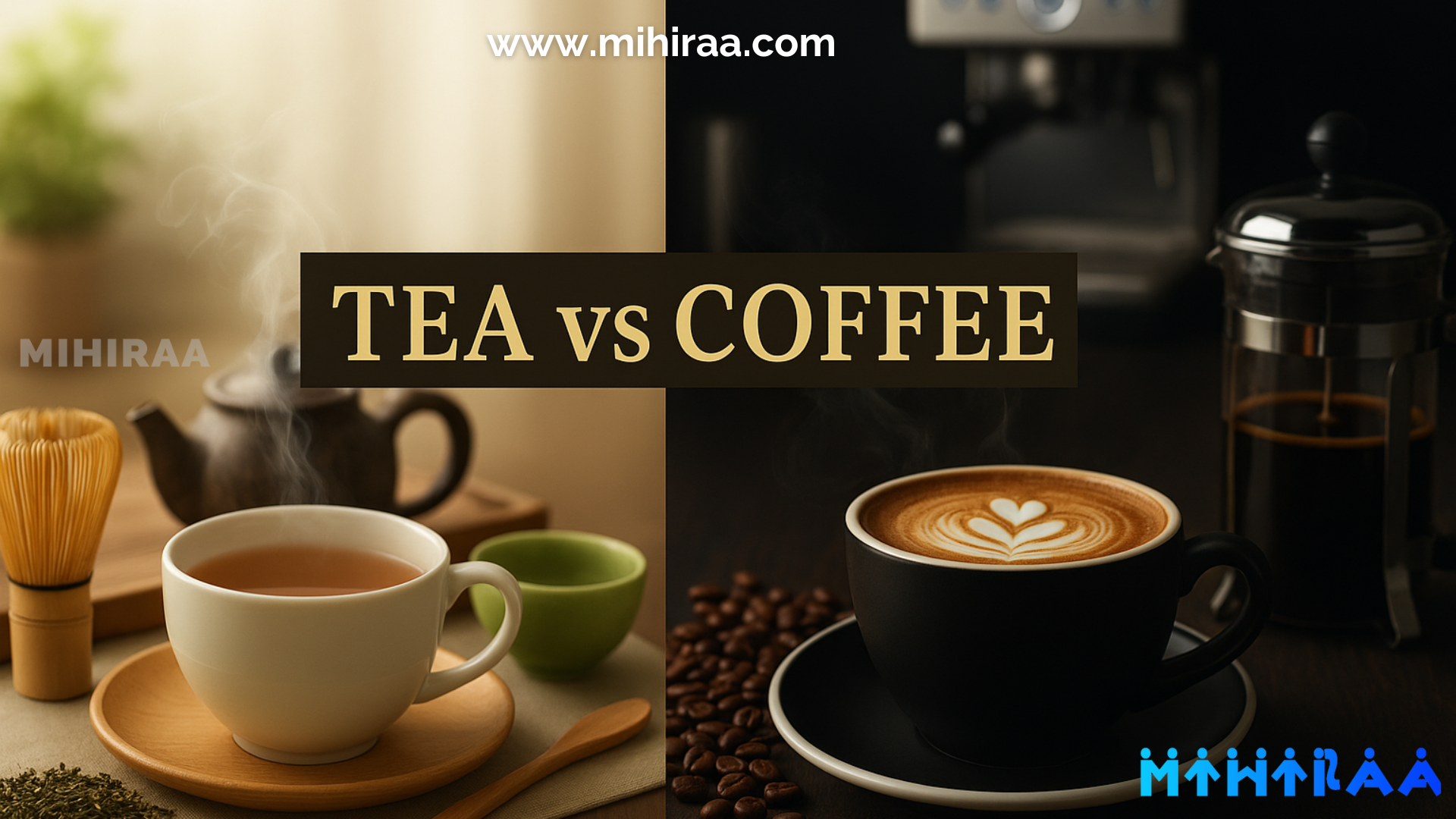
Tea vs Coffee: The Ultimate Head-to-Head Comparison
Tea or coffee – the debate is a global ritual. But which brew truly reigns supreme for your health, productivity, and lifestyle? We’re settling the score by answering the internet’s most-searched questions in a direct, head-to-head format.
-
Tea vs Coffee: Which is Healthier?
This isn’t a simple win/lose question. Both are healthy choices, but they excel in different areas.
Coffee is strongly linked to a reduced risk of Type 2 Diabetes, Parkinson’s disease, and liver conditions like cirrhosis and liver cancer. Its high antioxidant content, primarily chlorogenic acid, is a powerful agent.
Tea, particularly green tea, is celebrated for heart health and cognitive function. The catechins (like EGCG) in tea are potent antioxidants that can help lower bad cholesterol and reduce the risk of stroke.
The Verdict: It’s a tie. If you have a family history of liver or metabolic issues, coffee has an edge. For heart and brain health, tea is exceptional. The healthiest choice is the one you’ll drink without loading it with sugar.
-
Tea vs Coffee: Caffeine Comparison
This is the core difference that dictates the experience.
Coffee: Higher Caffeine. An 8-oz cup has 95-165 mg. It provides a rapid, sharp energy spike but can lead to jitters, anxiety, and a subsequent “crash.”
Tea: Lower Caffeine. An 8-oz cup of black tea has 25-48 mg, while green tea has 25-29 mg. The key difference is L-theanine, an amino acid that promotes calm alertness. This combination offers a smoother, more sustained energy boost without the crash.
The Verdict: Tea wins for sustained focus without jitters. Coffee wins for a powerful, immediate energy jolt.
-
Tea vs Coffee: Weight Loss Benefits
Both can play a role in a weight management plan.
Coffee: The caffeine in coffee is a well-known metabolism booster and can enhance athletic performance, helping you burn more calories during exercise. It can also act as a mild appetite suppressant.
Tea: Green tea is the star here. Its combination of caffeine and EGCG is believed to have a synergistic effect, enhancing fat oxidation (the body’s ability to burn fat for energy).
The Verdict: A slight edge to green tea for its specific fat-burning properties, but black coffee is a very effective, zero-calorie metabolism booster.
-
Tea vs Coffee: Which is Better for Anxiety?
This is one of the most critical differentiators for sensitive individuals.
Coffee: The high, fast-acting caffeine dose can exacerbate anxiety, cause heart palpitations, and increase feelings of nervousness in those who are prone to them.
Tea: The L-theanine in tea is a game-changer. It increases alpha brain waves, which are associated with a state of “wakeful relaxation,” effectively counteracting the anxious side effects of caffeine.
The Verdict: Tea is the clear winner for anyone managing anxiety or caffeine sensitivity.
-
Tea vs Coffee: Best for Productivity
This depends on the *type* of productivity you need.
Coffee: Best for short-term, high-intensity tasks that require a quick reaction time and a burst of energy. Think of meeting a tight deadline or powering through a repetitive task.
Tea: Ideal for long-term, deep work that requires sustained concentration and creativity. The “calm alertness” prevents distraction and helps maintain a steady flow state.
The Verdict: Choose coffee for a sprint, tea for a marathon.
-
Tea vs Coffee: Which Causes Less Acidity?
For those with digestive issues, this is a major factor.
Coffee: Is naturally more acidic (pH around 5), which can irritate the stomach lining and trigger acid reflux or GERD symptoms.
Tea: Is generally less acidic (closer to a neutral pH of 6-7), making it a gentler option for a sensitive stomach.
The Verdict: Tea is the winner for being less likely to cause stomach discomfort.
-
Tea vs Coffee: Sleep Impact and Timing
Timing is crucial due to caffeine’s half-life (the time it takes for your body to eliminate half of it).
Coffee: With its higher caffeine content, drinking coffee too late in the day (after 2-3 PM for many) can significantly disrupt sleep patterns and reduce sleep quality.
Tea: Due to its lower caffeine levels, it can be consumed later in the afternoon (until 4-5 PM for most) without the same disruptive effect, making it a better choice for a mid-afternoon pick-me-up.
The Verdict: Tea offers more flexibility for afternoon consumption without harming sleep.
-
Tea vs Coffee: Skin and Hair Benefits
The antioxidants in both beverages fight oxidative stress, a key cause of aging.
Coffee: The polyphenols in coffee may help reduce skin redness and protect against sun damage. Caffeine in topical serums can temporarily reduce puffiness.
Tea: Green tea’s EGCG is particularly powerful for skin. It has strong anti-inflammatory and anti-aging properties, can help with acne, and may promote healthier hair growth.
The Verdict: Tea, especially green tea, has a more established reputation for direct skin and hair benefits.
Niche & Curiosity-Driven Comparisons
Does Tea Hydrate Better Than Coffee?
Verdict: Myth Busted. While both are mild diuretics, the water content far outweighs this effect. Both coffee and tea contribute to your daily hydration needs.
Is Green Tea Better Than Black Coffee?
Verdict: It depends on your goal. For a pure, jitter-free energy boost and high antioxidant intake, green tea is superior. For a stronger metabolic kick and higher caffeine for alertness, black coffee wins.
Tea vs Coffee: Which Stains Teeth More?
Verdict: Tea (especially black tea) contains tannins that can stain teeth more than coffee. However, coffee stains are often more noticeable due to their darker color. Good dental hygiene mitigates both.
Tea vs Coffee: Longevity and Disease Prevention
Verdict: Both are associated with longevity due to their high antioxidant levels. Large-scale studies have shown that moderate consumption of either beverage is linked to a reduced risk of premature death from various causes.
Cultural & Regional Spotlight
Tea vs Coffee in India: Masala Chai vs Filter Coffee
Masala Chai: A spiced, milky tea. The health comparison shifts due to the addition of milk and sugar. It’s a cultural comfort drink.
Filter Coffee (Kaapi): A strong, milky coffee made with dark roasted beans. It’s a South Indian staple known for its powerful aroma and caffeine kick.
Ayurveda Perspective: Ayurveda generally views coffee as overly stimulating (rajasic) and can disrupt balance. Tea, particularly herbal varieties, is often seen as more sattvic (peaceful) and balancing.
Tea vs Coffee: Which is Better for Students?
For long study sessions that require calm concentration, tea is often the better choice to avoid caffeine-induced anxiety. For all-nighters requiring sheer alertness, students might turn to coffee.
Conclusion: The winner depends entirely on you. Choose Coffee for power, intensity, and a quick start. Choose Tea for calm, sustained focus, and gentle benefits. There’s no rule against enjoying both at different times of the day to suit your needs.